Why Sensory-Friendly Kids’ Design Is Going Mainstream
What used to be niche and clinical is now being designed with intention, aesthetics, and real-world wearability—for all kids.

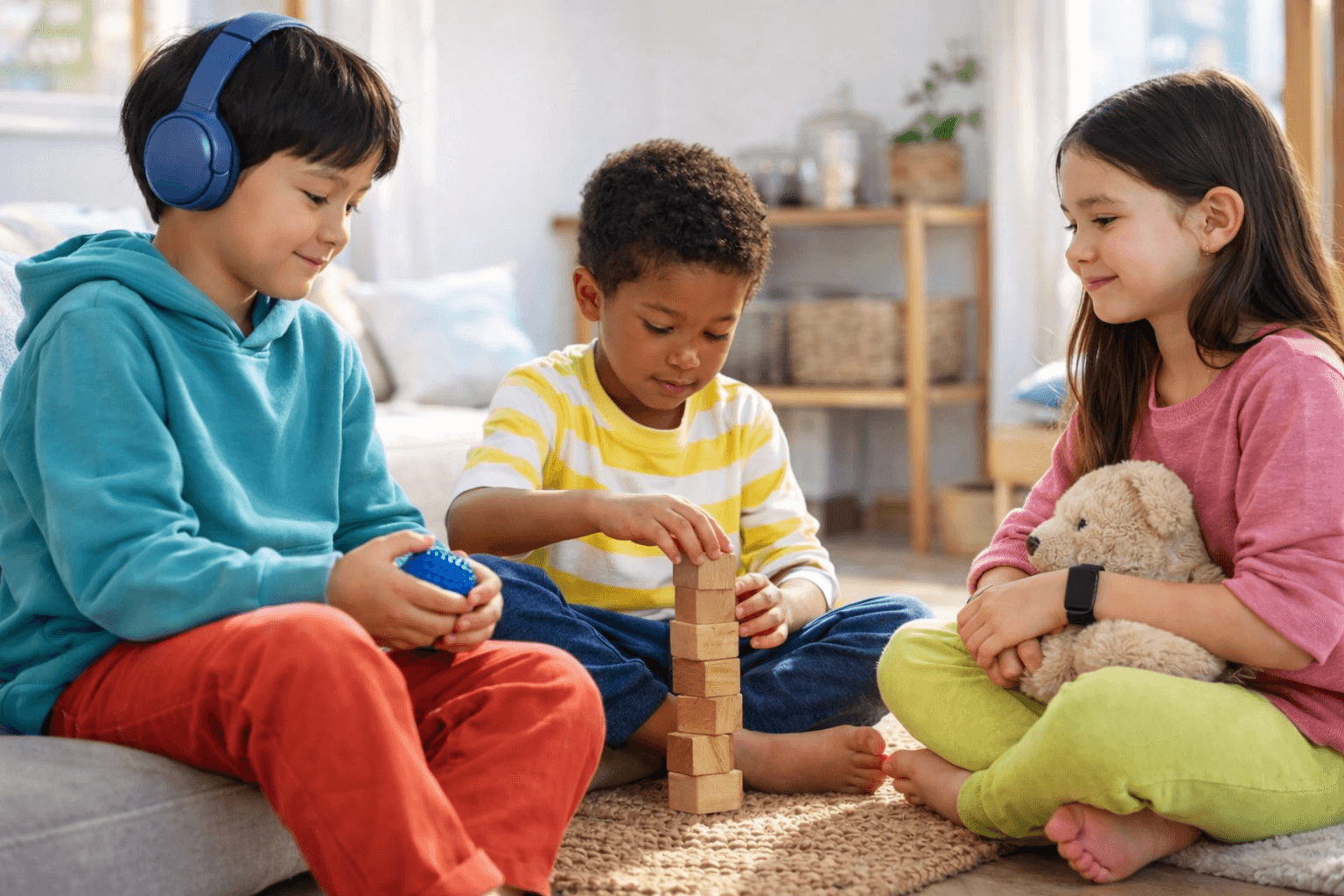
Photo: ChatGPT
For a long time, when people talked about kids’ products, “sensory-friendly” was treated as a niche category, something you sought out only if you had to. These products were often harder to find, clearly labeled, and designed to solve a very specific problem rather than fit seamlessly into a child’s everyday life. Parents who needed them were grateful they existed, but many of us also felt the tradeoff immediately: comfort or aesthetics, regulation or belonging. You could make something work, but it rarely felt like a true choice.
Lately, though, I’ve been noticing a real shift. Not in a loud, trend-driven way, but in conversations with brands, in the products crossing my desk, and in what’s finally showing up in stores and online. Sensory-friendly design is starting to feel less like an exception and more like a baseline. The tradeoff that used to feel unavoidable is quietly disappearing.
I see this not just through years of product testing and meeting with designers, but very clearly in my own home. One of my children can’t tolerate tags in pajamas or shirts, waistbands that press too tightly, or fabrics that feel even slightly rough against her skin. Another seeks sensory input in an entirely different way, chewing on drawstrings or sweatshirt cuffs, especially when she’s tired or trying to regulate herself throughout the day. These behaviors are everyday realities for a lot of kids and families. For a long time, accommodating them meant improvising, modifying, or settling for products that worked but never quite felt right.
What feels different now isn’t just greater awareness of varying sensory needs, it’s a shift in how designers think about children, comfort, and real-world use. Sensory-friendly clothing and accessories are no longer being built as special cases. They’re being designed as thoughtful, desirable products, the kind that work for a wide range of kids and look like they belong everywhere kids actually are. This shift matters, not because sensory-friendly design is suddenly popular, but because it’s finally being treated as what it is: good design.
Educational consultant Juliana Blum Bryansmith of Wee-Wellness Neurodiversity Parent Support Programs shares, “Clothing comfort can profoundly shape a child’s capacity to learn. In order to access instruction, a child must first be able to learn — and persistent physical discomfort can quickly erode that availability.”
From Niche Solutions to Intentional Design
In the past, sensory-friendly products were often framed as adaptive or therapeutic. That framing served an important purpose, and in many cases it still does. But it also shaped how these products looked and felt: clinical materials, limited color palettes, and designs that prioritized function while quietly apologizing for form. As a parent, this often put me in a familiar position, choosing between something my child could tolerate and something she actually wanted to wear.
What’s been encouraging to see more recently is how much that thinking has shifted. Designers are paying closer attention to how children actually experience clothing and accessories across an entire day, not just how they look when first put on. Soft seams and tagless construction are no longer treated as specialty features. Flexible waistbands that don’t dig in, forgiving fits that don’t require constant adjusting, and fabrics that stay soft after repeated washing are increasingly being treated as baseline decisions, not accommodations. These details can make the difference between a child staying focused or being distracted all day by how something feels on their body. “This isn’t about preference — it’s about bandwidth,” Bryansmith explains. “When the nervous system is preoccupied with discomfort, cognitive resources are diverted away from focus, problem-solving, and engagement.”
The same shift is happening with accessories. Tools meant to support regulation, things to hold, squeeze, chew, or wear, are being designed with more intention and personality. For a child who seeks oral input, that might mean a chewable item that looks like jewelry or a normal accessory, rather than something that immediately sets them apart. These products don’t announce their purpose. They simply do their job, and they look like something a child might actually choose for themselves. That move from “adaptive” to intentional is what’s bringing sensory-friendly design into the mainstream.
Regulation is for Everyone
One of the most meaningful changes in this space is a growing understanding that regulation isn’t diagnosis-specific. All kids have sensory preferences, and all kids have days when noise feels louder than usual, fabrics feel scratchier, or their bodies need more input to stay settled. Designing for regulation acknowledges that reality without turning it into something that needs to be labeled or explained.
Clothing that doesn’t itch, bind, or distract supports focus for many children, not just those with identified sensory sensitivities. Accessories that offer grounding input, something rhythmic, resistive, or soothing, can help a wide range of kids navigate transitions, classrooms, or long days. In my experience, what helps one child regulate often ends up helping another in a completely different way.
“Sensory-friendly design should be baseline design,” says Bryansmith. “When we treat sensory-friendly features as standard rather than exceptional, we’re not lowering expectations, we’re removing unnecessary barriers.”
The best sensory-friendly designs don’t require explanation, and they don’t ask kids to identify a need before they feel comfortable using them. They simply make room for supporting regulation in a way that feels natural and unobtrusive.
Aesthetics Are Part of Accessibility
For a long time, aesthetics were treated as optional when it came to accessibility. Comfort mattered; appearance came second. But kids don’t live in a vacuum. They live in social worlds. They care about how things look, how they’re perceived, and whether what they’re wearing helps them feel confident or self-conscious. When that reality was ignored, even well-designed products often ended up sitting unused.
What’s different now is that aesthetics are finally being treated as part of accessibility, not a distraction from it. When sensory-friendly clothing looks like any other clothing, and when accessories read as jewelry, tech, or everyday gear, children are simply more willing to wear and use them. Parents no longer have to feel like they’re choosing between what works and what fits in. Support becomes something that lasts, not something reserved for certain moments. Design that respects a child’s identity is design that actually gets used. Jennifer Jaye, LCSW and DIR/Floortime clinician, notes that as kids grow, “self-expression and style become meaningful aspects of identity formation and confidence. When a child feels othered, it can impact self-esteem and regulation because belonging is foundational to emotional safety.”
Accessories Are Leading the Shift
Interestingly, some of the most visible progress in this space has happened in accessories. Small, portable tools that support regulation, things a child can hold, wear, or keep nearby, are being designed with discretion and autonomy in mind. They’re easy to carry, easy to use, and they don’t call attention to themselves as “tools.”
Headphones, chewable items, and fidget-style supports increasingly look intentional rather than medical. They blend into daily life instead of standing apart from it. Autonomy is a form of accessibility, and accessories often provide it in ways clothing alone can’t, especially because kids can decide when and how to use them.
“Discretion matters because children deserve dignity,” Bryansmith says. “Regulation tools should feel empowering, not stigmatizing.” She adds that adults can “stamp” the process by teaching kids to notice internal cues and choose supports, so self advocacy becomes a strength, not a correction.
Why This Isn’t a Trend
It might be tempting to see this as a moment, another wave of interest that will eventually fade. But sensory-friendly design is sticking around for a very simple reason: it works. The features that support sensory comfort tend to improve wearability, durability, and overall satisfaction for everyone. Softer materials age better. Flexible designs accommodate growth. Thoughtful construction reduces friction and frustration. “When a child is distracted by how something feels on their body, Jaye says it can register as “neurological noise, or even a threat,” pushing their nervous system into sympathetic activation. “It is impossible to learn, play, and connect without their sense of safety.” These aren’t niche benefits; they’re universal ones. Designing for the edges almost always raises the bar overall. What helps a child who’s easily overstimulated often ends up helping a sibling, a classmate, or a friend. And once families and schools experience that difference, it’s hard to go back.
What This Means Going Forward
The mainstreaming of sensory-friendly kids’ design signals something bigger than a category shift. It reflects a broader understanding of children as full users, with bodies, senses, emotions, and preferences that all matter. I’m grateful that parents no longer have to choose between comfort and confidence, and that designers no longer have to treat inclusion as a separate lane. I’ve seen what happens when kids are supported by products that meet them where they are, without asking them to explain or justify their needs. The future of kids’ clothing and accessories is more thoughtful and more human, and that’s not just good for sensory-sensitive kids. It’s good design, period.
Rachel Rothman is a mechanical engineer and consumer product expert with deep experience in product testing, evaluation, and industry standards. She applies a rigorous, performance-first approach to assessing products across categories, translating technical insights into clear guidance that helps consumers make informed decisions.